
How to Call Landline with Local Number Using Cellphone – Step-by-Step Guide

Mobile communications have long been the primary means of communication, but landlines are still widely used in offices, government offices, clinics, and homes where the elderly reside. In such cases, it is essential to ensure that your number appears to be a local one. This increases the chance that the call will be accepted, especially if the caller does not answer unfamiliar or nonresident numbers.
People often face situations when they urgently need to contact an organization, clarify information, make an appointment, or resolve a personal issue — all by landline number.
This article describes exactly how to make call landline with local number using cellphone so that the call looks correct, and you are sure that you will be heard.



Understanding Local Numbers and Landlines
A local number is a phone number linked to a specific geographical region. It includes the area or city code and is recognized as “your own” for subscribers within that area.
Landlines, unlike mobile phones, are connected to a physical telephone line and are rigidly linked to a specific address.
Mobile numbers work over cellular networks and do not depend on location, so when you make a call, they can be identified as nonresident or even foreign, especially if you are roaming. This is important because some subscribers or organizations may not receive such calls.
So, the local number is perceived as more reliable and familiar, especially when calling landlines, where the recognition of the region is important.
*Discover: How to Use a Temporary Phone Number to Verify Account?
How to Call Landline with Local Number – Basic Concept
A call landline with local number phone is reduced to the correct dialing of the number, taking into account the telephone area code. A local number is considered to be one that begins with a regional code corresponding to the subscriber’s geographical location — for example, the code +1 212 for New York, +44 20 for London, or +49 30 for Berlin.
If you want your call to look like a local one, it is important to either physically be in the right country and city, or use a service that allows you to replace the outgoing number with a local one. This is especially true for international calls, when a regular mobile number is identified as a foreign one, and the recipient may not answer the call.
The dial structure itself depends on the country: in most cases, an international prefix is used (for example, +1 for the USA or +44 for the UK), the area code, and the subscriber’s number.
*Note: The correct format makes the call recognizable to the recipient and increases the chance of a successful connection.
How to Call a Landline with Local Number Using Cellphone – Step-by-Step
It is important to correctly specify the country code when calling a landline with a local number, the area code, and the number itself. Here’s how it works if you’re calling abroad, and you want your call to look like it’s local to the subscriber:
Step 1: Determine the recipient’s country and city code.
For example, for New York – +1 (US code) and 212 (area code), for London – +44 and 20, for Paris – +33 and 1.
Step 2: Use the international call format.
Always start the number with a “+”, then the country code, the area code, and only then the number itself.
Step 3: Dial the number in the full international format.
- The USA: +1 212 555 6789.
- The UK: +44 20 7946 0123.
- France: +33 1 42 68 53 00.
If necessary, use a virtual phone number with the required code.
*Note: If you want your number to be identified as a local number (for example, as a London number), use IP telephony or a virtual number service with the desired area code.
This approach is especially useful for international business calls, when it is important that your number looks like a local number for the recipient’s trust and convenience.
Using Area Codes Correctly
The region code is a key element when making a call to a landline phone. It indicates which city or region the number belongs to, and allows the network to route the call correctly. When making a call from a mobile phone, it is important to specify this code accurately, especially if you are located in another region or country.
For international calls, the structure is as follows: + [country code] [city code] [subscriber’s number]. For example, to reach a landline in Tokyo, you will dial: +81 3 1234 5678, where +81 – Japan, 3 – Tokyo.
Specifying the code accurately not only ensures a successful connection but also affects how your number is displayed to the recipient, especially if you use services that allow you to switch the number to a local one.
International Dialing Considerations
Calls to landlines abroad require a certain dialing procedure. In the international format, it always starts with a plus “+”, then the country code is indicated, followed by the regional code and the subscriber’s number. This ensures that the call is routed correctly and connected successfully.
Using the local area code in the number helps the call look familiar to the recipient, which is especially important during business contacts or official calls. At the same time, it is worth considering the specifics of billing and considering alternative communication methods — for example, virtual numbers, eSIM worldwide, or VoIP services that allow you to make calls with a “local” number display. This approach facilitates communication and increases the chances of a response.
*Discover: Which Carriers Support eSIM in USA: The Full List.
How to Call Landline with Local Number Without Extra Charges
In order not to overpay for calls to landlines from a mobile phone, it is important to organize the call correctly.
Firstly, make sure that the number is dialed based on your region — calls within the same region are usually charged as local and are cheaper.
Secondly, study the tariffs of your operator — many offer packages with minutes included for calls to landlines.
Finally, use modern communication services and apps that provide profitable calls via the Internet or secure US virtual numbers .
This will help you save your budget and, at the same, time stay in touch with the right people.
Using Mobile Apps to Call Landline
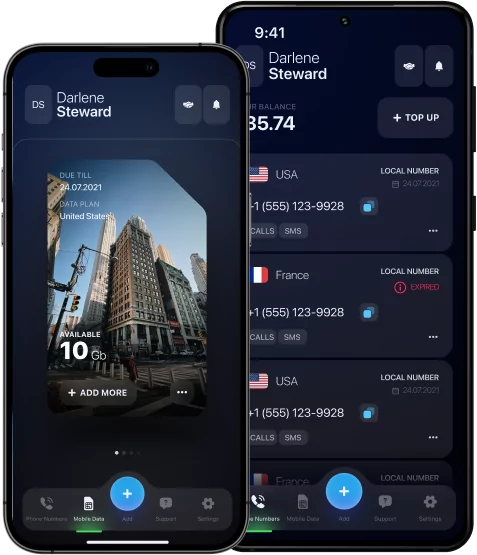
With the help of modern mobile apps and VoIP services, it is easy to make calls to landlines using local numbers to display the call. Popular services such as Viber Out, Google Voice, Rebtel, Zoiper, and Telnyx provide the opportunity to purchase virtual numbers with regional codes, which makes the call more familiar and trusting for the recipient.
Such apps work over the Internet, which reduces the cost of calls and often allows you to bypass the high tariffs of mobile operators. The use of these services is especially important for businesses and travelers, who need to keep in touch with customers and loved ones on favorable terms and with the correct display of the number.
Top Recommended Apps
For effective calls to landlines from a mobile phone with a local number display, you should pay attention to proven apps and services. They provide convenience, quality of communication, and help reduce costs. Here are some of the best options with their main advantages and disadvantages:
#1 Viber Out
- Pros: user-friendly interface, wide country coverage, and the ability to use local numbers.
- Cons: it depends on the quality of the Internet; tariffs vary by region.
#2 Google Voice
- Pros: free calls within the USA and Canada, ease of use, and integration with Google.
- Cons: limited in geography; not suitable for all international calls.
#3 Rebtel
- Pros: calls via local numbers without the Internet, favorable rates, and support from many countries.
- Cons: it requires a subscription for advanced features, and it is not fully functional in all regions.
#4 Zoiper
- Pros: flexible VoIP setup, suitable for business, and support for different protocols.
- Cons: difficult for beginners; requires additional configuration.
#5 Telnyx
- Pros: high-quality communication, virtual numbers, and tools for corporate clients.
- Cons: business-oriented; difficult to master for ordinary users.
These services will help make calls to landlines easier, more profitable, and with the correct display of the number.
Common Problems When Calling a Landline with Local Number
Calls to landlines from a mobile phone are sometimes accompanied by problems: busy lines, incorrect number entry, and network failures. An incorrectly dialed number is one of the most common causes of unsuccessful calls, especially if you forget to specify the desired region or country code.
In addition, an overload of telephone networks or temporary technical problems can lead to communication failures or the inability to get through.
To reduce the risk, it is important to carefully check the number format before making a call, use a stable connection, and, in case of repeated errors, try alternative communication channels, such as Internet apps for calls.
Tips for Faster and Clearer Landline Calls
For a secure connection and good quality calls to landlines, it is important to prepare properly. Therefore, always make sure that the number is dialed correctly, including the area code. This will reduce the likelihood of errors and speed up the connection.
Also, ensure stable mobile network signal strength: make calls from locations with good coverage or use Wi-Fi for VoIP apps. If the signal is weak, call back after a few minutes or change the location to improve communication.
It’s useful to disable background apps that can slow down your phone and update your software regularly. Such simple measures will help make calls to landlines faster, clearer, and more reliable.
Final Thoughts — Mastering How to Call Landline with Local Number
Calls to landlines from a mobile seem difficult only at first glance. In fact, it’s enough to understand how to dial a number correctly, taking into account regional codes and using modern services to make calls quickly and without problems.
Over time, after gaining experience and choosing convenient tools, you will easily make such calls. This will make communication with colleagues, friends, and family easier and more accessible, no matter where you are.